Matters of Life and Death (HI991)
Module Convenors 2026-27: Roberta Bivins and Elise Smith
Term: Term One
Time: TBA
About the Module
Context
Aims
Intended Learning Outcomes
Module Approach: Student Led Learning
Syllabus
Assessment
Context of Module
'Matters of Life and Death' addresses a range of topics in the history of medicine, science, technology and the environment via selected books and articles authored by teaching and research staff in the Centre for the History of Medicine, Science, and Technology. In each seminar, you will be joined by the author of the week's text(s). Student-led discussions with the authors will enable close study and reflection on each text's sources, methodologies and historiographical and theoretic approaches. This will enable students to consider the emergence of new histories of health, embodiment, technology, science and the environment, as well as the new challenges of work tackling global, emotional, and marginalised perspectives. All students are encouraged to relate the module's discussions to their own dissertation research and approaches.
Module Aims
The principal aim of this module is to enrich the work our students do (in terms of reading, learning, research and writing) for the History MA programme, and to support them specifically in developing wide and deep expertise in fields and methodologies related to their individual MA dissertations. Students planning to join the module are welcome to contact Roberta Bivins or Elise Smith (module conveners) in advance if they have any questions about the module approach, structure, readings, or assessments.
Intended Learning Outcomes
- Review the advanced literature in a variety of areas in the history of medicine, science, technology and the environment.
- Assess the theoretical underpinnings of this work.
- Draw on key concepts from one or more of the social, human and literary sciences.
- Work confidently with a wide variety of relevant primary source material.
- initiate and direct scholarly conversations and professional interviews.
Module Approach: Student Led Learning
The 'Matters of Life and Death' module gives its students the opportunity to analyse a series of issues in the histories of science technology, medicine and the environment in depth, and in conjunction with leading historians in these fields. Each seminar will introduce you to an important recent contribution to these histories, and provides the opportunity to discuss this work with the authors. This will enable students to develop an understanding of how the field is now evolving in tackling issues of life and death. It will also develop critical thinking about the challenges in undertaking such historical work. An introductory seminar will focus on strategy for interviewing historians about their work and its situation within the field. It will allocate roles, discuss areas for questions and a structure for the seminars, and identify further readings and reviews to assist analysis of the core texts. The emphasis will be on equipping students to take a lead in the organisation and intellectual direction of the seminars. The seminars in Weeks 2-9 will put these plans into operation. These seminars will centre on reading a book or articles written (or being written) by a member of staff in CHMST or the History Department at 桃色视频. All texts are accessible electronically via the 桃色视频 Library. The final seminar in Week 10 will give students the opportunity to explore how these histories are presented to wider publics via a site visit and conversation with curators. Past site visists have includes the Science Museum and Wellcome Collection in London; the Black Country Living Museum; and the Leamington Spa Art Gallery and Museum.
Students will be encouraged to draw from the seminars and the readings in their essays for the module. The subjects and titles of these essays will need to be agreed with the module convenor.
Week 1: Introduction (Roberta Bivins and Elise Smith)
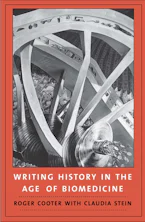
This term, in preparation for your dissertation, we are focusing in reading 'long form' arguments (so whole books, or whole collections of articles). Thinking, arguing and writing at length is in some ways quite different from writing an essay or an article, as you will all discover. This is why we have not identified specific parts of the book to read below. For the purposes of our discussion in seminar, though, we will be focusing on the claims about history in the present and the writing of histories in our increasingly biomedicalised world that are made in the Introduction. So at a minimum, please read that introduction AND whichever chapter seems likeliest to influence your own approach to your dissertation.
Reading:
-
- Roger Cooter with Claudia Stein, Writing History in the Age of Biomedicine, New Haven and London: Yale University Press, 2013.
Week 2: Rocks and Revolutions: Early Modern Natural Philosophy (Michael Bycroft)
Reading:
Week 3: Global Histories of Science (James Poskett)
Week 4: Editing Bodies and Minds in the Soviet Sphere (Claire Shaw and Anna Toropova)
Reading: Technologies of Mind and Body in the Soviet Union and the Eastern Bloc
Week 5: Environmental History: Above and Below in the History of Vietnam (Kathryn Dyt)
Reading: The Nature of Kingship and the Nguy峄卬 Weather-World in Nineteenth-Century Vietnam
Week 6: Reading Week
Week 7: Science and Technology Studies: Dams, Development and Democracy (Katayoun Shafiee)
Reading: Damming the Future: Governing Development and Democracy along an Iranian River.
Week 8: Gendering the Postcolonial Body Politic (Adyeeri Kembabazi)
Reading: A State of Morality: Sexual, Reproductive and Sartorial Politics in Idi Amin鈥檚 Uganda
Week 9: Diseasing Mobility? (Somak Biswas)
Reading: 'Transnational HIV/AIDS Activism in Europe: 1990-2000', Special Issue for the Journal for the History of Sexuality
Week 10: Curating Medicine (Elise Smith, Lynsey Cullen, Roberta Bivins).
NOTE THAT THIS WEEK WE WILL MEET FOR OUR ALL-DAY FIELD TRIP
Students will travel to a museum or heritage site to meet curators and discuss how histories of medicine and health are presented to general audiences.
All participants must complete and submit this form in order to join the Field Trip. If this form is not completed and submitted in time, you will not be able to board the bus.
| Information | |
| Tutor/s | Roberta Bivins and Elise Smith (Conveners); CHMST Staff |
| Term | TBA |
| Tutorial Day/Time | TBA |
| Venue |
TBA |